Cómo Estimar Trabajos de Pintura Interior

Figuring out what to charge for an interior painting job is one of the first real challenges you'll hit as a new painter. Charge too little and you're working for nothing. Charge too much and you lose the job.
The good news? You don't need a complicated formula to get it right. Here's a straightforward system to get you started.
Understand What You're Actually Pricing
Before you throw out a number, know exactly what the customer wants painted. Interior jobs can include any combination of:
- Ceilings
- Trim (baseboards, door casings, window casings)
- Doors
- Closets
Each one adds time and materials. Always ask the customer upfront what they want done before you start estimating — don't assume.
Build Your Baseline Price
The easiest way to estimate interior painting is to start with a standard room and adjust from there. A "standard room" is typically a 12x12 bedroom with 8–9 foot ceilings and a normal amount of trim.
Here's a sample baseline for that room:
- Walls only — $500
- Trim only — $300
- Ceiling only — $300
- Add closet — +$150
- Add door — +$75
These prices include both labor and materials and assume two coats of mid-grade paint (~$30/gallon). Adjust based on your local market.
Once you know what the customer wants, mix and match from your baseline to get a room price. It's that simple.
Adjusting for Room Size and Complexity
Every room is a little different. Here's how to adjust your baseline:
- More trim than usual — Rooms with lots of windows, crown molding, or detailed woodwork take more time. Add $50–$150 depending on how much extra cutting is involved.
- High or vaulted ceilings — More surface area plus potential equipment needs. Add a meaningful upcharge, or pass on the job if you're not set up for it yet.
- Heavy prep work — Patching holes, caulking, and sanding all take time. If a room needs significant prep, either price it separately or build it into a higher room rate.
Pricing a Full House
When a customer wants the whole house done, don't try to price everything in your head at once. Walk through it room by room:
- Sketch the layout — Draw a quick floor plan of every space being painted, including hallways.
- Measure each room — Get the dimensions. Don't skip small spaces — they add up.
- Price each room individually — Apply your baseline and adjust for size and complexity.
- Add it all up — That total is your bid.
This approach keeps you organized and makes it easy to explain your pricing if a customer asks.
Other Factors That Affect Your Price
- Color changes — Going from dark to light (or vice versa) often requires an extra coat. Price for three coats if needed.
- Number of rooms — Larger whole-home jobs can justify a slight discount since you're already mobilized and set up on-site.
- Your market — Rates vary by region. A fair price in a rural area might be low in a major metro. Research what painters in your area are charging.
Give Yourself Room to Learn
When you're starting out, you won't price every job perfectly — and that's okay. Put a price out, see how it lands, and adjust. Over time you'll build a feel for what your market will bear and where your costs actually sit.
The goal right now isn't perfection. It's getting reps in.
Or Let AI Handle the Estimating For You
Once you understand the basics of how interior painting is priced, the next question is: do you really want to do all this math manually on every single job?
For a lot of painters, the answer is no — and that's where AI comes in.
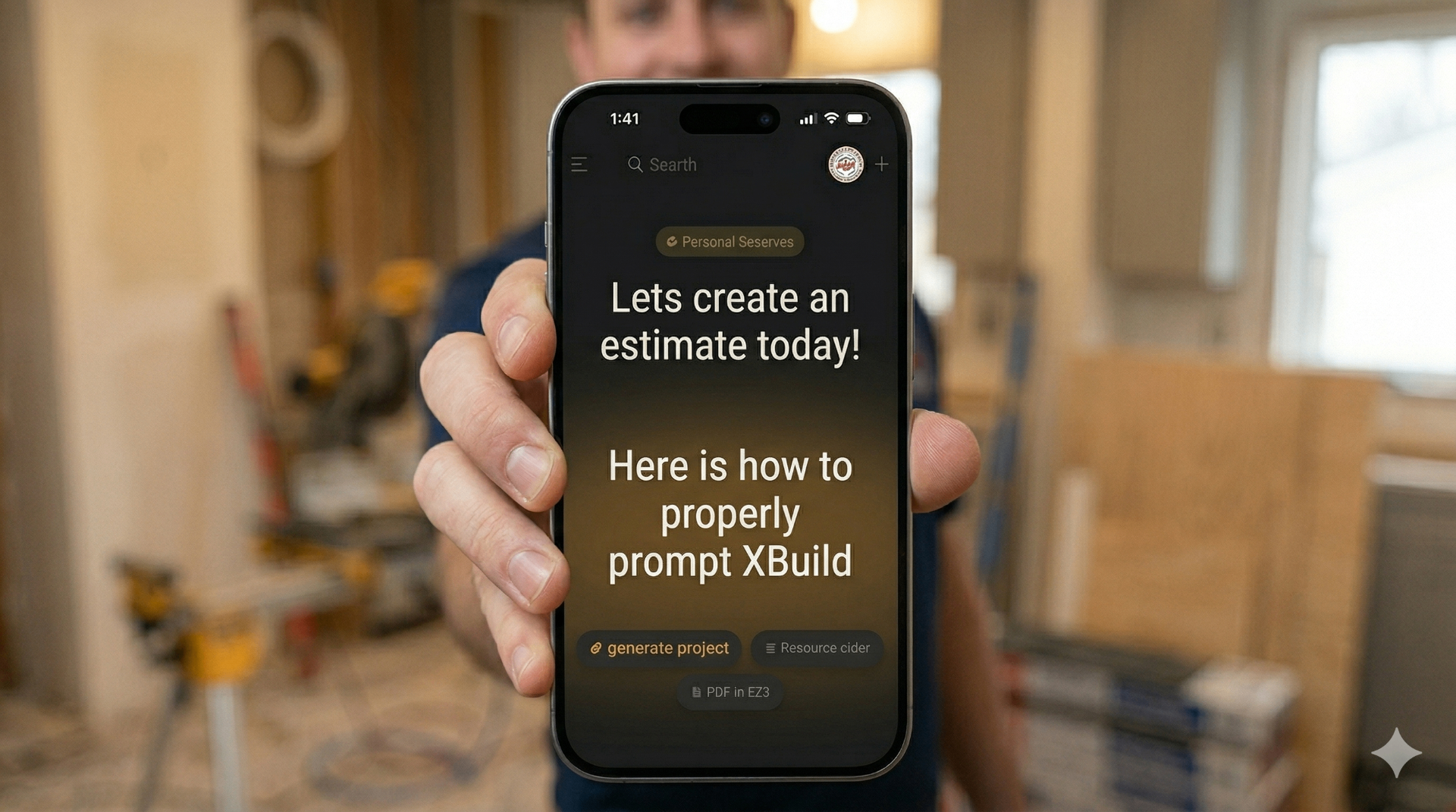
XBuild is an AI-powered proposal platform built specifically for contractors. Instead of sketching floor plans, doing room-by-room math, and manually typing up a quote, you just describe the job to the AI — and it builds a complete, professional proposal for you in minutes.
How AI Makes Estimating Easier for Painters
- Good/Better/Best pricing built in — Giving customers options increases your close rate. XBuild formats every proposal with tiered pricing automatically
- Professional proposals every time — No more sending a number scribbled on a piece of paper. Every estimate looks polished and credible, which builds trust with customers
- Digital signatures and payment collection — Customers can approve and pay directly from the proposal, cutting down on back-and-forth
- Any team member can use it — No training required. If someone on your crew needs to put together an estimate, they can do it from day one
- Save hours every week — Time spent writing estimates is time not spent painting. The faster you can turn around a proposal, the faster you can close the job and move on
Whether you're a solo painter trying to look more professional or a growing crew looking to streamline operations, having AI handle your estimates means less time on paperwork and more time doing the work you actually got into this trade for.
¿Listo para Probar XBuild?
Obtén tu primer presupuesto con IA en 15 minutos. Sin tarjeta de crédito requerida.
Prueba XBuild gratis